The GG Postdoctoral Medal is awarded each year to a postdoctoral researcher employed on a temporary contract at an institution in GB/Ireland who has published outstanding research in a peer-reviewed journal within the broad field of geochemistry.
The GG Medal aims to promote the work of post-doctoral researchers who are not yet independent research fellows by recognising their outstanding research contribution. One recipient will win the medal each year, based on the publication’s innovation, novelty and significance to its field. Medal winners will also be invited to give a keynote lecture at the Geochemistry Group’s annual Research in Progress (GGRiP) meeting.
Nominations for the GG Medal can be submitted at any time throughout the year and will be reviewed at the January committee meeting (deadline 15th Jan for previous year’s publication).
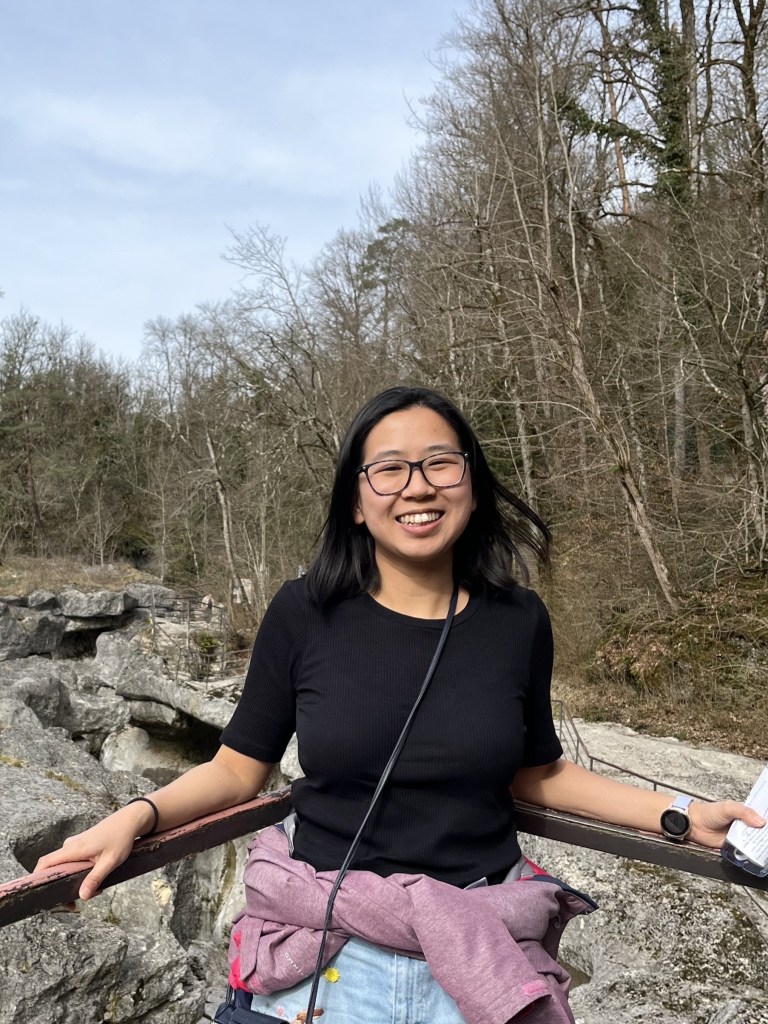
Our 2026 awardee is Dr Lena Chen (University of Bristol) for their paper: “Mineralogical controls of the oceanic nickel cycle” published in Nature Communications.
“This paper presents experimental evidence that manganese mineral diagenesis, namely mineral aging and transformation can control the flux and isotopic signature of nickel recycled from sediments to seawater. It supports a new mechanistic framework showing how changes in nickel bonding to manganese minerals drive isotopic fractionation under oxic seafloor conditions which has implications for the modern marine nickel cycle and the interpretation of ancient sedimentary records. These findings also extend beyond nickel, offering insights into the benthic cycling and isotopic variability of other manganese-associated trace metals many of which are essential micronutrients for marine productivity.”
In 2026, we had an extremely high-quality set of applications, so we give honourable mentions to two further outstanding contributions:
The First by Dr Paul Beguelin (Cardiff University) for the paper: “Variations in Hawaiian Plume Flux Controlled by Ancient Mantle Depletion” published in AGU Advances.

“In this project, we use an innovative modelling approach to quantify plume source parameters from Hawaii’s radiogenic isotope systematics. Rather than focusing on data structure, our Python-based code solves decay and polybaric melting equations on a sample-to-sample basis, deriving the proportion of peridotite in the plume source, its extent of time-integrated melt-depletion, melting degree and corresponding potential temperature. Our results show the (pre-existing) degree of peridotite melt-depletion changes through time along the chain. We find the lower density of depleted peridotite causes episodes of high plume buoyancy and higher magma productivity per unit of time. The magma volume flux predictions derived from our geochemical model show a good fit with independent geophysical observations and provide a quantitative, data-driven explanation for the so-far enigmatic spike in Hawaii’s magmatism 1-3 Myr ago. We identify the composition-driven buoyancy variations caused by peridotite melt-depletion as an underrated driver of mantle convection and demonstrate process-based geochemical modelling can successfully fill the gap between geochemical data and geophysical observations and models”.
The second is by Dr Kun Zhang (UCL) for the paper: “Ocean deoxygenation after the Sturtian Snowball” published in Nature Communications.
“This study combines carbonate-based traditional and non-traditional multiproxy evidence to document a transient episode of global ocean deoxygenation following the Sturtian Snowball Earth. The results highlight how post-glacial weathering, nutrient cycling, and redox instability shaped early ocean habitability and may have delayed the rise of complex aerobic life.”
The publications of awardees span a range of geochemistry-related topics:
2025: Dr Aled Evans – Ocean crustal veins record dynamic interplay between plate- cooling-induced cracking and ocean chemistry” EPSL. doi.org/10.1016/j.epsl.2024.119116
2024: Dr. Rayssa Martins – Nucleosynthetic isotope anomalies of zinc in meteorites constrain the origin of Earth’s volatiles. Science. doi.org/10.1126/science.abn1021
2023: Dr. Carrie Soderman – Global trends in novel stable isotopes in basalts: Theory and observations. GCA. doi.org/10.1016/j.gca.2021.12.008
2022: Dr. Arola Moreras Marti – Quadruple sulfur isotope biosignatures from terrestrial Mars analogue systems. GCA. doi.org/10.1016/j.gca.2021.06.007
2021: Dr Matthew Warke – The Great Oxidation Event preceded a Paleoproterozoic “snowball Earth”. PNAS. doi.org/10.1073/pnas.2003090117
2020: Dr Chris Standish – The effect of matrix interferences on in situ boron isotope analysis by laser ablation multi-collector inductively coupled plasma mass spectrometry. Rapid Communications in Mass Spectrometry. doi.org/10.1002/rcm.8432
2019: Dr Nikitha Saji – Hadean geodynamics inferred from time-varying 142Nd/144Nd in the early Earth rock record. Geochemical Perspectives Letters. doi.org/10.7185/geochemlet.1818
2018: Dr Alex McCoy-West – The neodymium stable isotope composition of the silicate Earth and chondrites. EPSL. doi.org/10.1016/j.epsl.2017.10.004
2017: Dr Marie-Laure Pons – Zinc isotope evidence for sulfate-rich fluid transfer across subduction zones. Nature Communications. doi.org/10.1038/ncomms13794
2016: Dr Myriam Lambelet – Neodymium isotopic composition and concentration in the western North Atlantic Ocean: Results from the GEOTRACES GA02 section. GCA. doi.org/10.1016/j.gca.2015.12.019

