
Early in your career it can sometimes be difficult to get the exposure for you and your research necessary to make the next big step in academia. We seek to assist this process by awarding one individual each year funding to deliver a tour of Great Britain and Ireland, presenting in a number prestigious institutions around GB/Ireland. You must currently hold a Ph.D and be registered as working at an institution within GB/Ireland.
Our 2026-2027 ECR Prominent Lecture awardee is Dr Julia Neukampf. The ECR award provides Julia with funds to deliver a lecture tour of Great Britain and Ireland through the period of May 2026 to April 2027. Julia has proposed two talks (see full details below). If would like to host Julia, reach out to directly (Julia.neukampf@manchester.ac.uk, neukampfjulia@gmail.com) or email the Geochemistry Group secretary George Cooper (CooperG3@cardiff.ac.uk).
There is one deadline for the ECR prominent lecture series each year: January 15th. Download the application form here.
Other recent awardees include Dr Kate Kiseeva (2016 – Oxford, now at UCC), Dr David Wilson (2017 – Imperial, now at UCL), Dr Rosalie Tostevin (2018 – Oxford, now at University of Cape Town), Dr Rich Taylor (2019 – Cambridge, now at Zeiss), Dr Emily Stevenson (2020 – Cambridge), Dr Martin Mangler (2021 – Durham), Dr. Jacqueline Campbell (2022; University of Oxford), Dr. Elliot Carter (2023; Trinity College Dublin), Dr. Ross Whiteford (2024; Royal Holloway), Dr. Savannah Worne (2025; Loughborough University) and Dr. Rebekah Moore (2025; Imperial College).
Scroll to the bottom of this page to see some of our previous winners tour reports.
Apply to host Dr Julia Neukampf (2026-2027 ECR Awardee)
Julia is a Research Associate in Planetary Science at the University of Manchester. Her research explores how lithium and halogens behave during magmatic processes on Earth and in the early Solar System. By combining field studies, high-resolution geochemical analyses, diffusion modelling, and experimental petrology, her work bridges volcanology, igneous petrology, isotope geochemistry, and cosmochemistry, providing new insights into both terrestrial volcanic systems and the earliest stages of planet formation. She has developed innovative approaches using lithium as a tracer of short-timescale magmatic processes and has contributed to understanding melt-vapour interactions in meteorites, shedding light on how volatile elements were distributed during planetary formation.
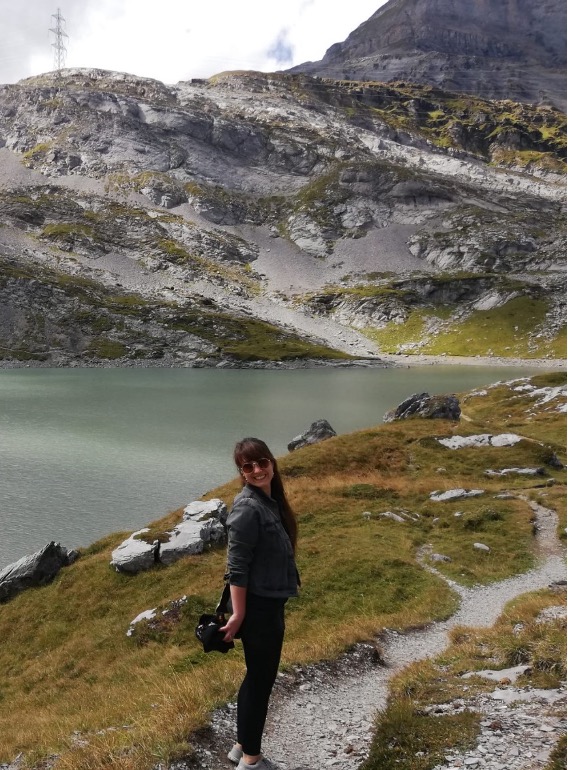
Lecture 1: Lithium fingerprints across the silicic volcanic life cycle
Lithium is a powerful tracer of processes occurring in volcanic systems, offering unique insights into how silicic magmas evolve during storage in magma chambers, ascent, eruption, and cooling at the Earth’s surface. Owing to its rapid diffusion and large isotopic mass difference, lithium is highly sensitive to processes such as degassing, chemical exchange, and cooling, making it an effective tracer of shallow magmatic processes. However, the extent to which lithium records primary magmatic degassing, as opposed to post-eruptive modification, remains poorly constrained due to its rapid mobility and the overprinting of magmatic signatures during cooling and hydration after eruption.
In this talk, I present results from studies of lithium concentrations and isotopes across a range of volcanic materials (Fig. 1), including melt inclusions, minerals, groundmass glass, ignimbrites, and lavas. These data reveal how lithium records degassing processes operating in magma chambers, but also how these signals can be modified during post-eruptive cooling. The results demonstrate that rapidly quenched materials can preserve primary magmatic signatures, whereas more slowly cooled deposits often experience significant overprinting due to lithium mobility. These findings have important implications for interpreting geochemical records of volcanic degassing, constraining timescales of magmatic processes, and understanding how lithium becomes concentrated and redistributed in silicic magmas and volcanic deposits.
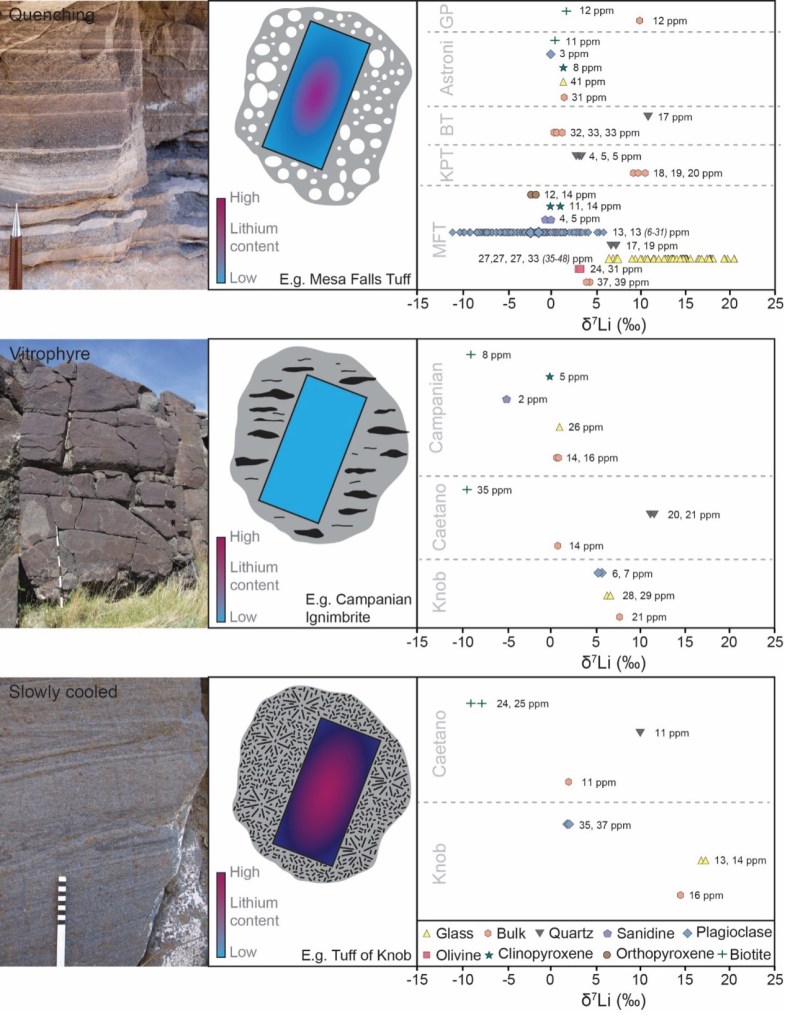
Fig. 1: Plots of δ⁷Li for mineral phases and bulk-rock separates, with Li concentrations shown alongside symbols, organised by cooling environment (quenched, vitrophyre, and slowly cooled).
Lecture 2: Halogens and lithium in early Solar System magmatic processes
Understanding how volatile elements behaved in the early Solar System is key to reconstructing how planets formed and acquired their chemical inventories. Halogens (F, Cl, Br, I) and lithium play a central role in magmatic processes, as they are incompatible in most minerals and preferentially partition into melts, fluids, and vapour phases at high temperatures. However, their primary carriers and pathways of distribution remain debated, partly due to their highly variable abundances in chondritic meteorites.
This talk presents new results from studies of halogens and lithium in chondrules, mesostasis glass, and olivine crystals in both ordinary and carbonaceous chondrites. The findings show that these elements become concentrated in late-stage melts and record extensive melt-vapour interaction during chondrule formation and cooling in the solar nebula (Fig. 2). Systematic differences in halogen abundances between meteorite groups point to variable degrees of vapour-melt exchange and distinct nebular environments, rather than simple inheritance from precursor materials. Together, these results provide new constraints on early magmatic processes and demonstrate how melt-vapour interactions helped shape the volatile budgets of planetary bodies.
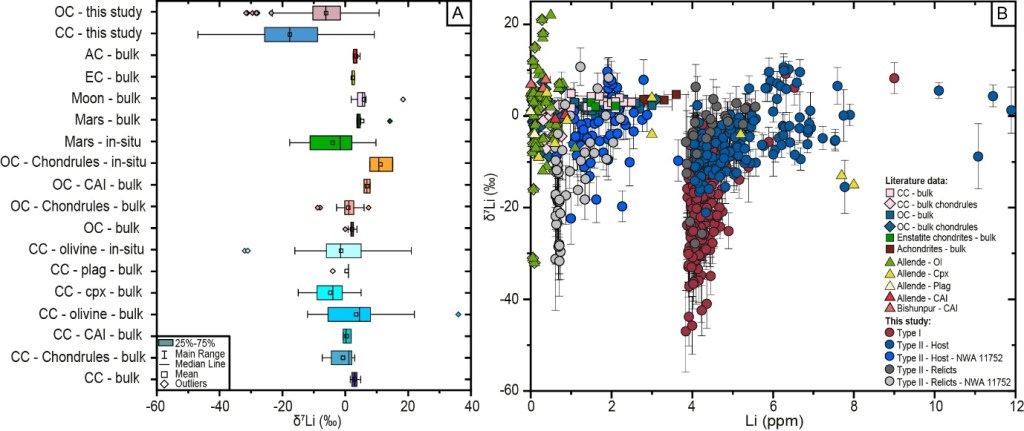
Fig. 2: (A) Lithium isotopic compositions (δ⁷Li, ‰) across extra-terrestrial reservoirs, including literature data for bulk chondrites, chondrules, CAIs, and mineral phases, alongside new in-situ data from this study. (B) δ⁷Li (‰) versus Li concentrations (ppm) for olivine from type I and II chondrules, including relict grains, with literature datasets shown for comparison.
Report from Ross Whiteford (our 2024-2025 award winner)
Between September 2024 and May 2025, I visited 9 Universities – 6 of which I’d visited before for one reason or another, and 3 of which were completely new to me. I started at Southampton, where I did both my Undergraduate and PhD. This was the first time I’ve been able to go back since I left (due to moving abroad, followed by the pandemic). It was nice to be back at the Oceanography Centre – and I was happy to see you can still find me in a couple of pictures on the walls if you know where to look (spot me if you can).

In October I visited Cambridge, where I gave two talks. One to the department, another for students organised by the Sedgwick Club who kindly hosted me to chat after. I was delighted to bump into current chair of the Geochemisty Group, Paul Savage while visiting Cambridge as well!
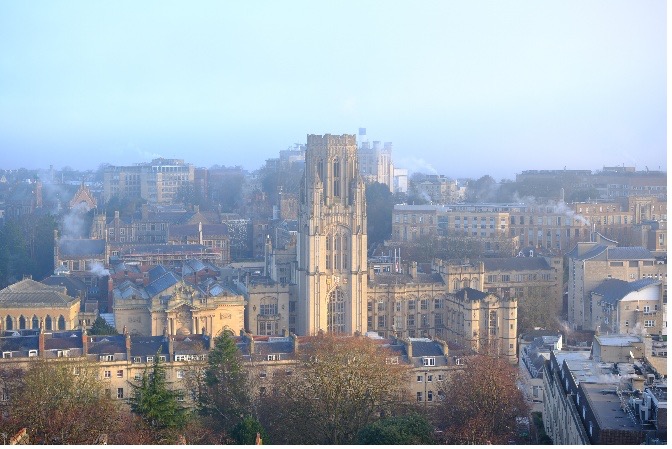
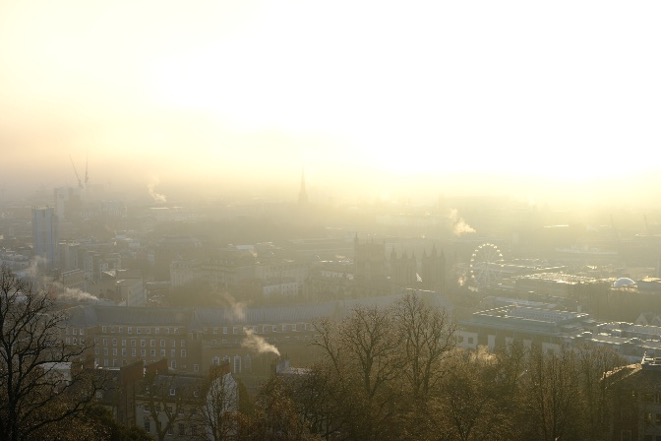
After a Christmas hiatus, I visited Bristol in January. I was treated to some beautiful views from Cabot Tower, and chance to visit some family who live nearby. I gave two related talks, which really gave an opportunity to go into depth about my research and have productive conversations with colleagues at Bristol.
March was a busy month, with talks at three Universities. First Royal Hollway (my current institution), then Cardiff. In Cardiff, I spent some time in the morning walking the Bay Trail, which took about 3 hours – a little longer than I expected and I was nearly late! All was well in the end, and I had a wonderful time discussing many collaborative projects.

The day after Cardiff I visited UCL, where I had some insightful questions about my work and some really helpful discussions with colleagues.
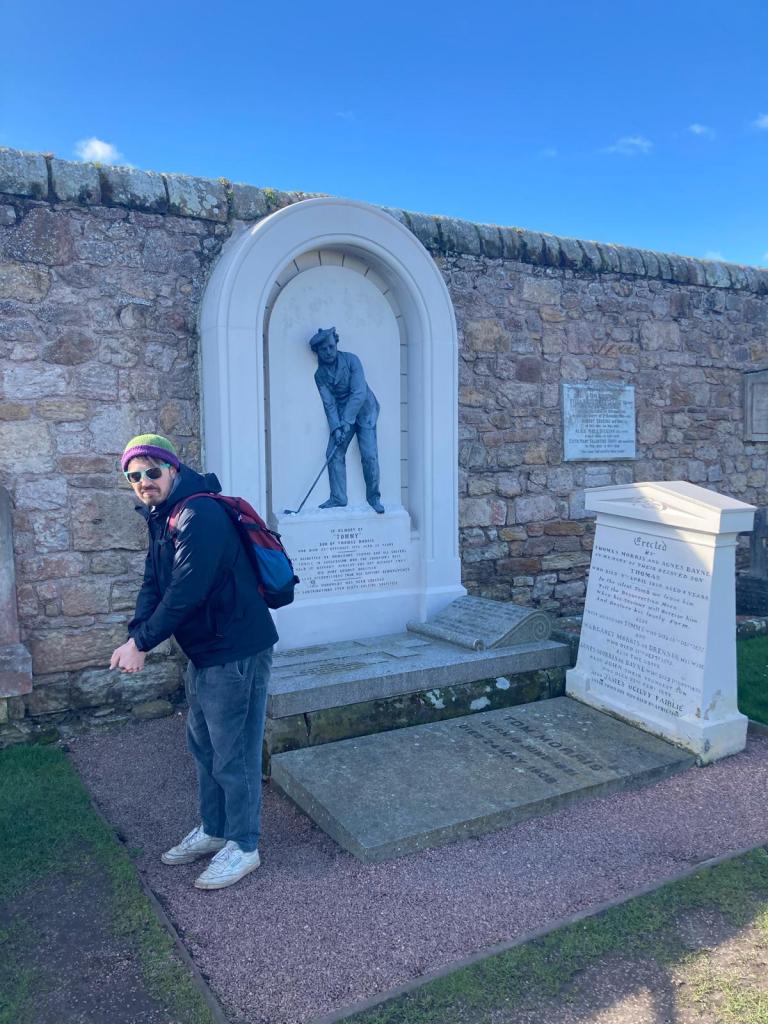
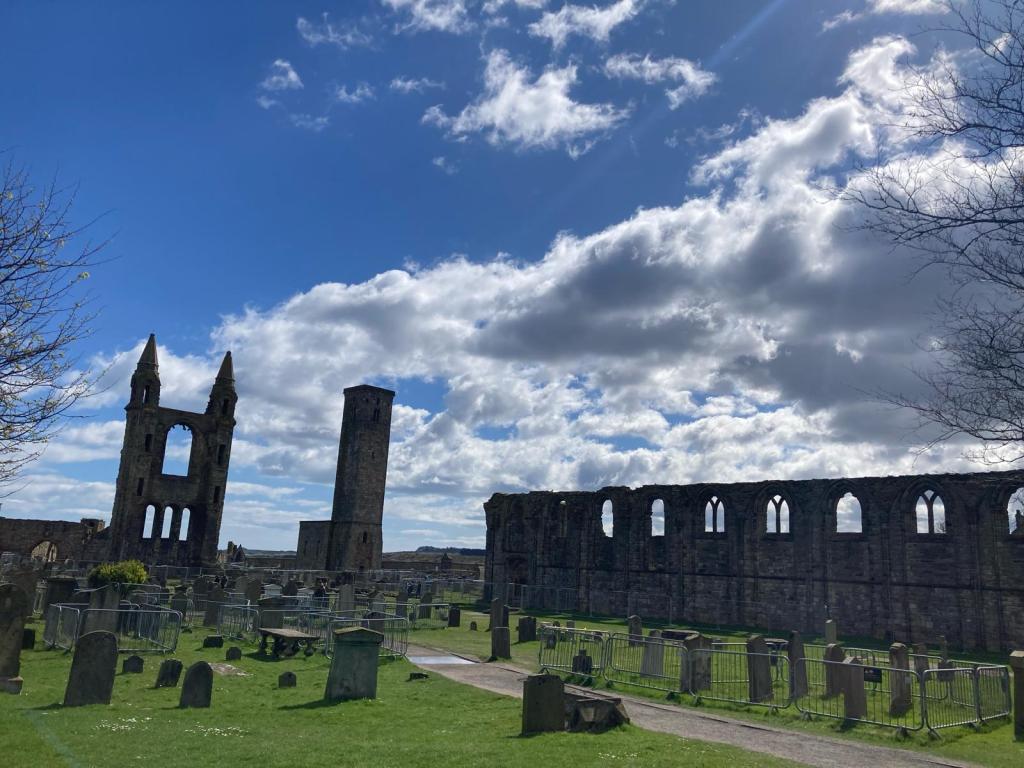
The final leg of the tour started with a visit to St Andrews (my previous institution) to give a talk for the COASTgroup. I happened to visit on an opportune day, as in the evening I got to join the potato party! Where there were a myriad of baked potato toppings to try.
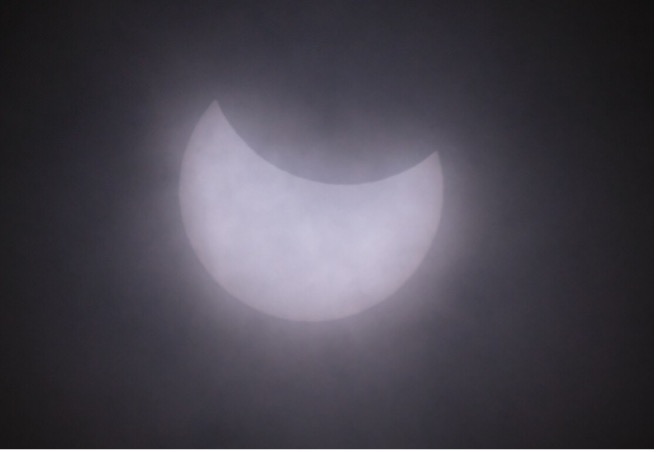
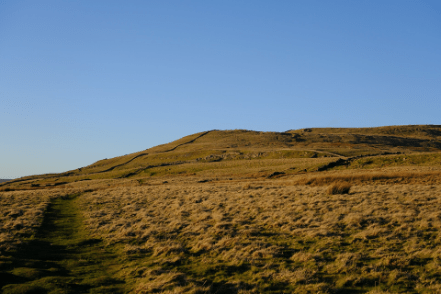
From St Andrews I went straight to Leeds, a city I’ve never visited before. The sun was shining, and I got to meet several new people and catch up with many others. I went straight from Leeds for a holiday in the Yorkshire Dales, which happened to coincide with a solar eclipse!
The culmination of the tour was naturally GGRiP, this year in Birmingham. It was a fantastic conference, both academically and now with included social events, which were spectacular. I had a wonderful time, and was honoured to receive Early Career Researcher Prominent Lecture Series award.
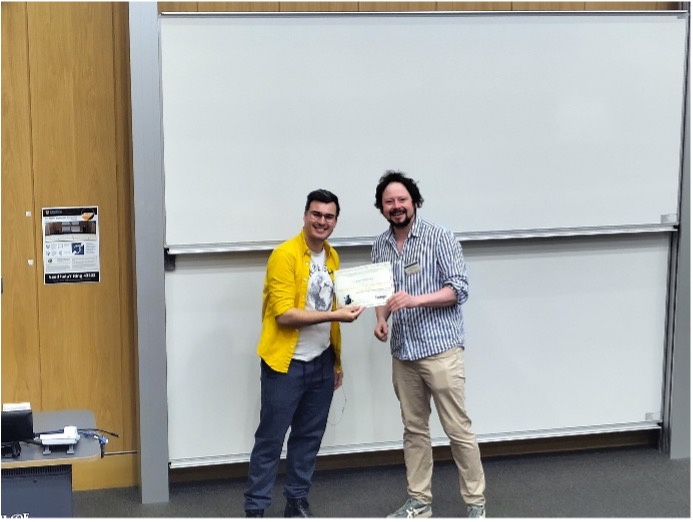
I’ve had many joyous times on the tour, both personal and professional. There’s only one thing more I’d like to say, and that’s thank you. Thank you to everyone who took time to host me, and thank you to the Geochemistry Group whose funding and support made this tour possible.
Report from Elliot Carter (our 2023-2024 award winner)
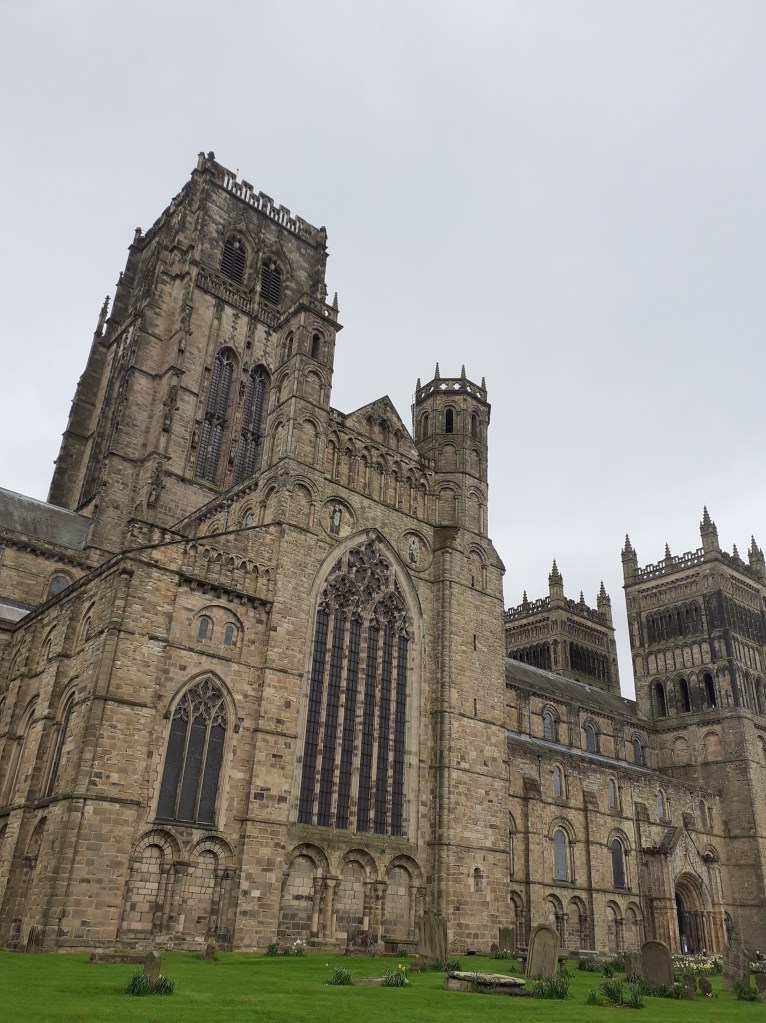
I started my tour close to home turf at University College Dublin followed by a lovely visit to Leeds where, as well as my seminar, I had lots of engaging discussions about IODP Expedition 399 which carried on well into the evening. Next up I headed to Cambridge and experienced the strange feeling of speaking in the lecture theatre where I had (and sometimes fell asleep in) many of my undergraduate lectures. Following a great day of meetings and discussion I was very kindly invited by Marian Holness to high table at Trinity College, which was a wonderful and unforgettable experience. What should have been the end of the tour, a keynote at GGRiP in Durham, was nonetheless a real highlight and a lot of fun. For various reasons, including moving countries to start a lectureship at Keele University, the series ended up spilling into summer and autumn, first with a great trip up to St Andrews and then down to Southampton which also provided a perfect opportunity to catch up with colleagues from a research cruise. Altogether, the prominent lecturer series has been a fantastic and invaluable experience, allowing me to connect and talk science with a huge range of people I wouldn’t have been able to otherwise. Thanks very much to the Geochemistry Group for making it possible.
 Geochemistry Group