
Julian Fuchs- International Conference on Palaeoceanography (ICP) 15, Bengaluru, India
Every three years, palaeoceanographers from all over the world come together for what is probably the most beloved conference in the community – ICP!
As a first-timer this year, it didn’t take me long to understand why this conference has such an excellent reputation. Even though it is fairly large, it never feels like it. There is always just one talk at a time, and each talk is by a researcher personally invited by the scientific committee. Additionally, giving a talk at ICP typically is a once-in-a-career thing. This means that not only do you not have to sprint from one seminar room to another in between talks while frantically checking your watch, but all talks are also incredibly well thought out and tailored to be understood by a broad audience. For the presenters, it is an honour to be invited to speak at ICP, and I felt that in every single slide presented and every word spoken this year. Everyone else is restricted to a poster, which results in an incredible amount of fascinating posters to explore, with contributions from Master’s students to seasoned professors side by side.
While I myself am not strictly a palaeoceanographer, my work on a mechanistic understanding of foraminifera biomineralisation directly relates to how and why the geochemical proxies that most of the paleoceanographers use work, and how they are calibrated. Speaking directly to these researchers to better understand their application and understanding of foraminiferal geochemistry was immensely helpful for me to tailor my future research to the needs and wants of this community. At the same time, I felt I was able to help convey the importance of research like mine for their work. I presented a poster on metastable carbonate phases as precursors in calcite formation and the possible impacts on trace elements like Mg/Ca. The feedback and support I received from other participants were immensely motivating and invaluable. I left ICP with more collaborators, friends and exciting work to do which is exactly what you want from a meeting like this.
Last but not least, ICP is hosted by a different institute in a different country each time, and for ICP15 we were welcomed in Bengaluru, India. It was my first time visiting India and being able to see this country was an incredibly opportunity in itself. Flights are not cheap and without the Geochemistry Group’s financial support, I wouldn’t have been able to attend. I want to extend my deepest gratitude to the Geochemistry Group for making this possible for me and so many other early career researchers before me!
Emily Hollingsworth – IMOG 2025, Porto
Having attended the International Meeting on Organic Geochemistry (IMOG) online back in 2021, during one of the Covid lockdowns, I was eager to travel to Porto to experience the event in-person for the first time. Between the 7th and 11th of September 2025, I met and heard from a wonderful community of organic geochemists. The scientific discoveries shared were exciting, and particularly the medal awardees’ speeches inspiring.
I was also fortunate to have been given the opportunity to give a plenary talk. The talk was titled, “Investigating Past Methane Cycle Perturbations through the Lens of Novel Polyfunctionalised Hopanoids”. This was the largest audience I have spoken in front of thus far in my career, but also the most relevant. I was therefore keen to receive feedback, and these have helped shape new insights into my research.
Beyond the conference, I had a lovely time exploring Portugal and building connections with other early career researchers. I am massively thankful to the Geochemistry Group. I would not have been able to attend IMOG without their support. I hope that travel bursaries such as this one continues to provide PhD students with the opportunity to attend international conferences.
Emily Archibald – Goldschmidt 2025, Prague
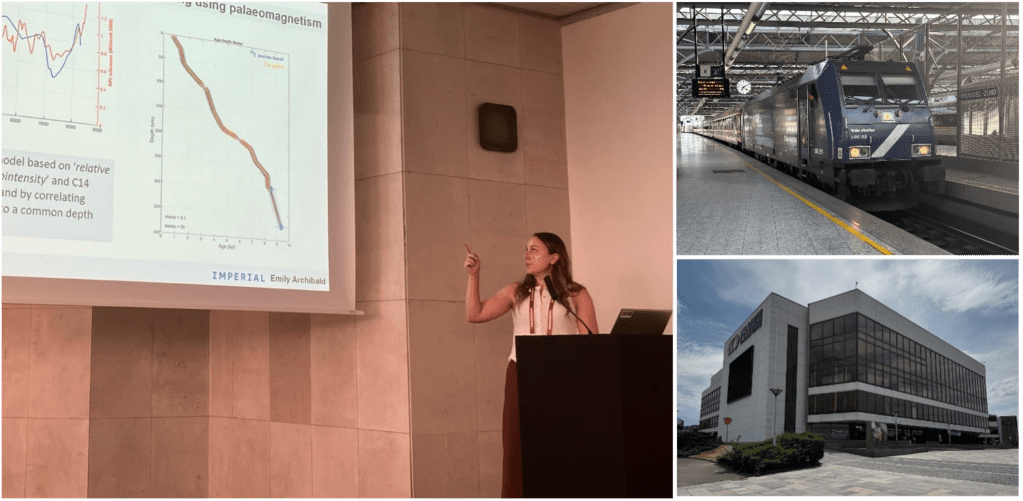
In July 2025, I attended and presented at the Goldschmidt conference in Prague. This was my first international conference, and the first time presenting work from my PhD at a large conference. My talk, titled Holocene dynamics of Thwaites Glacier: New insights from offshore provenance records, presented radiogenic Nd and Sr data measured on three sediment cores. My new data, alongside previously published work, analysed whether there had been any provenance changes in the sediments over the past 10,000 years, and how we can utilise these changes for reconstructing past glacier dynamics. I presented in a session dedicated to Antarctic and Arctic biogeochemical cycling, so it was great to connect with other scientists studying polar regions.
Goldschmidt brings together various different aspects of geochemistry, so it was great to attend sessions outside my research area. The main hall plenary sessions always started with a small awards ceremony. This was great to celebrate everyone’s achievements in geochemistry related research. Early career research sessions were held every lunchtime, which allowed us to meet other PhD students from all over the world and discuss experiences and tips on how to manage work-life balance, publishing research, and career development.
I also enjoyed exploring Prague! The city has a great travel network, which made it easy to sightsee in my spare time.
I was able to travel to this conference by Eurostar and European Sleeper trains. This allowed me to experience a new way of travelling, and meet other solo travellers along the way, some of which were also attending the conference!
I am extremely grateful to the Geochemistry Group for their support in attending Goldschmidt, Prague.
Callum Pearman – Goldschmidt 2025, Prague
In July 2025, I attended the Goldschmidt conference held in Prague, supported by a bursary from the Geochemistry Group. As I am in the third year of my PhD and preparing to submit my research to journals, this experience was really valuable to obtain feedback. I presented a poster entitled: “Ocean Drilling Reveals Collapse and Resurgence of the Iceland Mantle Plume”, which led to many illuminating conversations with academics working on similar topics. In particular, I enjoyed talking to others who work in the field of marine geology, studying materials drilled by the International Ocean Discovery Program or dredged in seagoing cruises.
In addition to attending many fascinating poster and oral presentations through the week, I also got the opportunity to explore the city of Prague. The Early Career mixer, with included boat tour on the river, was a particular highlight!
I’d like to thank the Geochemistry Group for making it possible for me to attend this year’s Goldschmidt, and I would encourage others to participate in the annual Research in Progress meeting!
Emily Fearns-Nicol – EGU 2025
I recently attended the European Geosciences Union (EGU) General Assembly for the first time, supported by a travel bursary from the Geochemistry Group. It was a fantastic experience that helped me gain a broader perspective on current research in the geosciences. The conference included a wide range of talks and poster sessions, which provided a great opportunity to learn about the work being done by researchers around the world. I presented a poster on “The Role of Terminal Electron Acceptors in Peatland Restoration,” which facilitated interesting discussions with researchers working on similar topics. It was great to get feedback and learn from others. These conversations have given me new insights and directions to explore in my own work.

I also enjoyed being able to attend sessions outside of my immediate research area, including several talks focused on Equality, Diversity, and Inclusion (EDI). These sessions raised important issues and gave me a lot to think about regarding how science can be made more accessible and inclusive.
It was also a great to visit Vienna and I enjoyed having time to explore the city during the week. I attended EGU with several people from my department at Durham University, which made the experience even more enjoyable and it was useful to be able to share thoughts on the sessions and support each other through the week.
I’m grateful to the Geochemistry Group for their financial support in attending EGU. It was a very valuable experience, I learned a lot and thoroughly enjoyed the conference.
Rebecca V M Robertson – EGU 2025
At the end of April 2025, I attended EGU in Vienna. This year they received a record 19,000+ abstract submissions, so it promised to be a fascinating and hectic meeting of geoscientists from across Europe and beyond. My abstract was accepted into the exciting Fluid-Rock Interaction session within the Tectonic Studies division and oral presentations were held in a somewhat cavernous hall pictured below. This was an opportunity to describe my research to a unique mix of researchers as I straddle several fields (geochemistry; geomechanics; and structural geology), with smaller conference meetings generally only addressing one aspect of the work. My PhD investigates mineral reactions on faults during earthquakes and what the mechanical consequences of the reaction products are for future seismic events. This is a challenge to observe in natural settings, so we used an experimental approach of creating earthquakes in the lab and seeing what happened to the input material. The abstract can be found here: https://doi.org/10.5194/egusphere-egu25-6845 . After the presentation, number of useful conversations ensued that offered new perspectives on my data so far. Thank you to those who stopped for a chat!
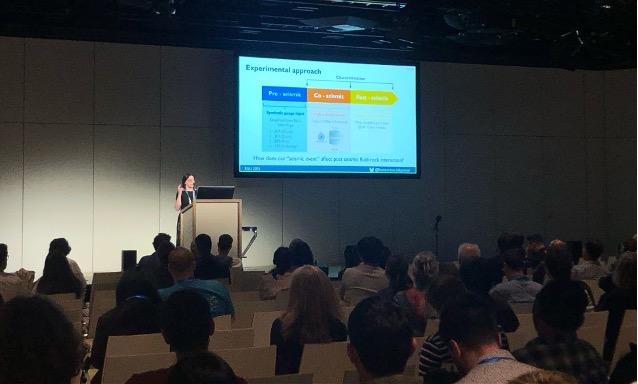
But was that all for EGU? No! I was a co-convener for a session early in the week that was incredibly busy (one of those sessions where every seat in the room is filled and all floor space had someone standing or kneeling in it). Abstract submission had been slow, so we hadn’t expected such a turn out! Here is a link to the session: https://meetingorganizer.copernicus.org/EGU25/session/53928 .
Last year, I had the pleasure of supervising an integrated masters project looking at carbon in fault zones. This developed into a collaboration with an old supervisor of mine from the University of Aberdeen, Prof Clare Bond, who presented our work so far at the end of the week (https://doi.org/10.5194/egusphere-egu25-16667). It was a great excuse to catch up in person and discuss the future direction of the project.
Other work running parallel to my PhD involves an International Ocean Drilling Programme expedition that happened at the end of 2024 (Exp. 405, JTRACK). This was a major international collaboration that drilled into a tectonic plate boundary fault east of Japan to sample the slip surface of the Great Tohoku-Oki Earthquake in 2011. EGU was the first time I’ve seen any of the scientists I sailed with and there was a session convened by one of the science co-chiefs that offered an update on some folk’s work (https://meetingorganizer.copernicus.org/EGU25/session/53535). It was great fun catching up!
Thank you to the Geochemistry Group for enabling attendance of this meeting at the end of my PhD!
Isabelle Davis – Goldschmidt 2024, Chicago
In August 2024 I attended the Goldschmidt Conference in Chicago. It was an exciting experience and the first opportunity for me to present my PhD research at a large conference. My talk, Quantification of carbon dioxide removal via growth of Bluetime peas in basalt amended soil, focused on results of a laboratory based enhanced rock weathering experiment. The conference allowed me to connect with other scientists who are researching climate solutions through geochemistry and learn more about advancements and approaches that I can apply to my own work. Throughout the week I also attended many talks and poster sessions, which was a fun opportunity to engage with geochemical research both related and unrelated to my PhD.
In between the hustle and bustle of the conference, I got to spend some time exploring Chicago! I went on an architectural boat tour, wandered the art museum and took a sunny walk along the beach. It was also a unique experience to be in Chicago the same week as the Democratic National Convention, which brought a lineup of politicians, celebrities, and thousands of visitors to the city.
I am thankful to the Geochemistry Group for their support in attending Goldschmidt. The ability to present my research and the connections I gained will be valuable to me as I continue with my PhD and career.
Keyu Lu – Goldschmidt 2024, Chicago
The Goldschmidt 2024 conference was held in Chicago, USA. Its hybrid format and the support from the Geochemistry Group enable me to present my PhD research remotely.
In the last poster session, I presented my Cu and Zn isotope results from Greenland fjord waters and explained their implications for tracing local micronutrient supply and cycling. It was a rewarding and impressive experience to share my PhD work with scientists across the globe. I was also much encouraged to find the geochemical community is giving more attention to the polar region, the vulnerable forefront of climate change. However, the annoying side of staying online is that I couldn’t get much feedback.
The flexibility of the online attendance makes it an enjoyable experience to be an audience – I was able to repeatedly watch the most relevant talks to dig into their very details and utilise that to improve my research. Without any live online talks, the month-long recordings transform the conference with an exciting (and perhaps slightly nervous) atmosphere into a prolonged “virtual museum” tour. The diverse “exhibitions” from a number of different geochemical perspectives have greatly broadened my view. This peaceful experience also makes me look forward to having more engaging face-to-face conversations in future meetings. So, it’s time to refresh my communication skills now!
Peter Mc Ardle – MetSoc 2024
In 2024 I applied to the Geochemistry Group for a bursary to support my attendance at the Annual Meteoritical Society Meeting 2024. Later, the Group kindly agreed to provide me with a bursary.
The conference spanned the 28th July – 2nd August. On Sunday the 28th July I attended an opening reception for the conference. Here I met some new contacts and also caught up with previous acquaintances.
The main conference itself took place between the 29th July and the 2nd August. Topics covered included both meteorites and planetary bodies within the solar system, with disciplines from geochemistry, geochronology, petrology, sample return to modelling and many more covered throughout the various talks and poster sessions. It was particularly helpful to learn about research in my own field, geochemistry and geochronology. This gave me some ideas for new approaches which I could take with my own research. It was also useful to learn of topics and disciplines which are outside of my own field of interest. This gave me some new perspectives and also helped me appreciate the breath of planetary science research taking place in the community.
Mid-week, at the society annual awards ceremony, I received the Wiley Award for my 2023 MetSoc talk. During the conference I gave a 15 minute talk entitled “Bulk and In Situ Ar-Ar Dating of Enstatite Chondrites”. This was my second full length talk at a scientific meeting. After the talk I received several interesting questions and even discussed a potential research collaboration.
Throughout the conference there were plenty of opportunities to network and also enjoy some good food and weather. I thoroughly enjoyed my time at MetSoc 2024, and I am very grateful for the bursary support from the Geochemistry Group.
Laura Wainman – Cities on Volcanoes 12, Antigua, Guatemala
Between 9th – 21st February 2024 I had the exciting opportunity to attend the Cities on Volcanoes 12 Conference in Antigua, Guatemala, partly supported by a travel grant from the Geochemistry Group. This conference is truly interdisciplinary, drawing together researchers from across the physical and social sciences, all under the unifying theme of ‘volcanoes’ and the risk they present to society. Many of the speakers themselves came from indigenous or volcanically-impacted communities, and it was especially powerful to listen to the experiences of people who have lived through volcanic disasters. The conference was also the first bi-lingual COV, which not only increased accessibility but also created the opportunity for much broader discussions around volcanic risk and perceptions.
During the conference I presented a 10-minute talk on “Lateral variation in the trace element emissions of degassing lava flows, with implications for trace metal exposure”. This summarised the first chapter of my PhD work which focuses on how the trace element emissions from lava flows vary as the lava flow becomes older and more evolved, and explores how this may change the air quality hazard profile associated with these emissions. It was wonderful to be able to present this work to a room full of experts and I was very grateful to have so many helpful discussions afterwards. Attending the conference was an amazing opportunity – to connect with other researchers, explore future collaborations, and see Fuego and Pacaya volcanoes! Thank you to the Geochemistry Group for their support!

Arianna Olivelli – Ocean Sciences Meeting 2024, New Orleans
Thanks to the Geochemistry Group, whose support I am extremely grateful for, I was able to attend the Ocean Sciences Meeting 2024 in New Orleans.
The conference kicked off with a wonderful plenary session in the format of a ‘live documentary’, showcasing the intersection between historical racialized oppression and injustice with various environmental problems in their communities in Louisiana. It was an extremely thought-provoking experience that I will remember for a long time.
I gave my talk, titled “Lead isotopes as tracers of anthropogenic pollution and oceanographic processes in the South Atlantic Ocean” on Monday morning. In addition to enjoying presenting my latest research, I had a great time learning more about the advancements in the field of geochemical tracers in oceanography from other speakers. I spent the rest of the week learning more about various aspects of biogeochemical cycling and physical processes in the marine environment. I also thoroughly enjoyed New Orleans – its jazz bars, lovely architecture and welcoming people made it a special place.
The next edition of the Ocean Sciences Meeting, in 2026, will be held in Glasgow and it will be the first time the conference is hosted outside of the USA. Hopefully, it will be a great chance to get more representatives from the UK and European geochemistry communities to join the largest conference in oceanography!
Adrienn Maria Szucs – Irish Geological Research Meeting (IGRM23), Belfast
I started my Ph.D. in September 2019 so by the time I had enough results to present, the pandemic forced meetings to be held online. Now, three and half years later, I have plenty to share and discuss, so it was time to meet my local scientific community for the first time in-person in Belfast at the 66th Irish Geological Research Meeting 2023 (IGRM23).
I travelled up to Belfast by train on the 3rd of March, Friday. The event started with a wine reception which was followed by an opening talk. I was excited to hear the keynote speaker of the evening, Prof Andy Gale, talking about ‘Reconstructing the Cretaceous greenhouse world’. I had the pleasure to listen to his talk online, but never in person.
I knew so many people from virtual interaction; faces and names were familiar from previous online conferences, meetings, email conversations, and discussions. It was so nice to finally match the faces to names and names to faces, and most importantly, have a discussion in-person.
Saturday and Sunday were filled with excellent talks from academics, early-career scientists, and students. It was fascinating to see the variety of research topics and indulge in discussions. It was very inspiring to spend the conference dinner with such a community and share the common enthusiasm for science with everyone in the room.
My presentation was the second one on Sunday morning, I received some interesting questions and good feedback on my presentation style. The end of the conference came with a pleasant surprise; I received an honourable mention from the Irish Geological Association.
Overall, I left Belfast with some valuable experience, advice on career progression, name cards of potential future collaborators, and various ideas for future research. This wouldn’t be possible without the support from the Geochemistry Group, I would like to thank them again for their endless support throughout my Ph.D. journey.
Sanjana Sridhar – Goldschmidt 2023, Lyon
This July I attended the annual Goldschmidt conference, hosted in Lyon, France. This was the first time I was able to present my PhD work (in poster format) to the wider cosmochemistry community, and I received lots of invaluable feedback and comments, which I hope to implement in the future!

The talks and posters relating to my session were particularly interesting and allowed me to get a better picture of the state of our field, and the new, exciting research being carried out across different groups. Goldschmidt also allowed me to finally meet collaborators and network with other researchers in my field, which was a great experience.
Since the conference is so large and spans so many disciplines, I also enjoyed attending talks in unrelated sessions, with highlights including determining the ages of river sharks via the isotopic compositions of their vertebrae, and determining food chains and dietary habits of Pleistocene taxa! This gave me an insight into the wide-ranging and wonderful applications of isotopic geochemistry, which is an opportunity that is probably unique to such a large conference!
In-between the numerous talks and record-breaking heat, I managed to explore some of the historic centre of Lyon, as well as try some traditional Lyonnaise cuisine, and watch the Bastille Day fireworks from the city centre. This opportunity was possible through the generosity of the Geochemistry Group travel grant, which allowed me the opportunity to take the train to Goldschmidt, and hopefully reduce the carbon footprint of my attendance.

Sophie Slater – Goldschmidt 2023, Lyon
As with so many things over the last three years and counting, Covid-19 had a huge impact on conferences whether large or small, national or international. This is how it came to be that a final year PGR (me) had never attended a multi-session conference; and this was a big one – 19 simultaneous rooms dedicated to geochemical research, 8 hours of poster sessions, an amphitheatre!
Lyon in July was swelteringly hot, with highs of nearly 40°C. Promised thunderstorms failed to properly deliver, and I found respite in one day being a ‘mere’ 26°C; I used that time to explore Vieux Lyon and see a few sights before the lure of science took me back to the Cité Internationale where the conference was being held.
At the Sunday icebreaker I ran into several people I knew from GGRiP and other ECR-forward events, and we exchanged information about when each of our posters and presentations would be. This proved to be a great way to meet new people – through those folks I had met in less intimidating circumstances, although my confidence to approach people grew as the week went on. I chose a 3-on/1-off method of presentation attendance to make sure I’d be able to make it through the marathon week intact, which worked quite well with the multi-room structure as I flitted between subjects very close to my own research, those tangential topics that give better context, and the occasional totally-unrelated presentation whose title interested me. The poster sessions gave opportunity for me to talk more in depth with people doing research either in a similar time period as myself, or using similar methods and techniques – and to see what procedural advances have been made.I had a long wait until Friday afternoon for my own presentation, Geochemical Insights into Antarctic Glaciation at the Eocene-Oligocene Transition, which (despite my nerves) seemed to go well. The discussion immediately following the talk was beneficial, and I was glad to let my own science out into the community. Without the support of the Geochemistry Group I wouldn’t have been able to attend Goldschmidt, and the experience and contacts made there will continue to help as I move through my ECR career.
Ri Cao – IAVCEI conference 2023, New Zealand
IAVCEI is one of the largest volcanology and geochemistry conferences, draws more than 1000 attendees from all over the world and is held every four years. This year’s conference, which included a wide range of subjects such as igneous petrology, earthquake seismology, volcanology, remote sensing, seismic hazards, and more was held in Rotorua, New Zealand. I gave an oral presentation of the first chapter of my dissertation, attended the Rhyolite-MELTS pre-conference workshop and participated in the Taupō Volcanic Zone fieldwork after the conference.
This was also the first time I delivered an oral presentation at an international conference in person. Fortunately, I arrived to Auckland one day before the heavy rain, which prevented a large number of participants arriving in time. I firstly attended thermodynamic modelling MELTS workshop over the weekend, which was an excellent opportunity for me to (1) learn about the robustness of different versions MELTS software and (2) initiated collaborations with other MELTS users and software developers (Paula and Paul).

I completed my 15 minutes oral presentation on Thursday afternoon, 2nd of February, entitled ‘formation of steep-sided domes on Venus’. In general, my presentation went quite well and attracted a number of scientists’ attention, who work on the volcanism/Tectonics of Venus and terrestrial analogue domes. Their feedback is extremely insightful and beneficial for the development of my PhD. I also listened to other talks during my session as well, which I used to forge interdisciplinary collaborations with planetary geologists.
The intense rain has stopped since the conference. I also attended the post-conference fieldwork to observe terrestrial rhyolitic domes near Taupo Lakes, where the scenery is quite breathtaking. I especially appreciated the chance to examine lava domes up close and to collect samples for future investigation.
I am very appreciative for the financial assistance from the Geochemistry Group, which has given me the chance to (1) travel to New Zealand to present my PhD work in person and (2) have the opportunity to initiate collaborations with world-renowned experts in the field.
Zhe Dong – Goldschmidt 2023, Lyon
The Goldschmidt conference is a geochemistry feast where geochemists from all over the world get to meet researchers with the similar interests, learn the latest updates in their respective fields, and broaden their horizons with all the newest advancements in the analytical techniques.
This year’s Goldschmidt was taking place in Lyon, a lovely city in France where you can see some great architectures and enjoy some authentic French food. Upon arriving in Lyon, a great journey begins, I’ve heard many very interesting and helpful talks, seen lots of informative posters, had some very useful discussions with some super insightful researchers. In addition, I sighed up for the mentor/mentee programme this year, and I had a lighthearted chat with my mentor Marcus Gutjahr, he is very friendly and gave some good advice on my current work. Also, some unexpected meetings with some old friends and acquaintances had definitely coloured this trip even more.
I presented my work as a poster in the session 9B with the title ‘Si and Mg fractionation during reverse weathering: an in vitro experimental approach’, during the display, I had the opportunity to share my current work to the interested audience, and I received some very helpful and positive feedback.
I also got to witness the celebration of The Bastille Day during my stay in Lyon, at which day all the citizens in Lyon gathered together to watch the marvellous firework at the night.
I am greatly grateful to the Geochemistry Group for supporting me with the travel grant, which made this wonderful trip happen. I would love to attend the Goldschmidt again in the future.

Arianna Olivelli – Goldschmidt 2023, Lyon
Goldschmidt is the largest geochemistry conference in the world, and this year over 5000 delegates came together in Lyon, France to discuss the latest advances in the field. This was the first in-person European edition of Goldschmidt since 2019.
The conference kicked off on Sunday with an ice breaker, during which I had the chance to catch up with some old friends from my master’s as well as meet my mentor. Goldschmidt organised a very well-planned mentorship programme, which allowed me (and many other PhD students and early career researchers) to discuss career aspirations, challenges and science with more senior researchers who volunteered as mentors. A huge thank you to them all for their time and help!
During the week I attended many sessions on anthropogenic pollution to the environment and marine geochemistry. I presented my work, titled “Decline of anthropogenic lead in South Atlantic Ocean surface waters from 1990 to 2011: New constraints from concentration and isotope data” in the GEOTRACES session on Wednesday afternoon. I received interesting questions and afterwards had the chance to meet with some individuals on a one-to-one basis to discuss our common interests in lead isotopes in the ocean. Hopefully, this will lead to some new collaborations in the future.
Attending Goldschmidt was also a fantastic opportunity to meet new people from around the world and go back to Lyon, which is one of my favourite French cities. The conference ended on Bastille Day, so the spectacular fireworks did not go amiss!
I am extremely grateful to the Geochemistry Group for their support and generosity, which allowed me to travel to the conference by train, with a reduced carbon footprint, and present my work to a large international audience. I have no doubt that my future career will benefit from my presence at Goldschmidt 2023.
Tong Wang – Goldschmidt 2023, Lyon
As the foremost annual, international conference on geochemistry, Goldschmidt has attracted oral and poster presentations from a broad spectrum of geochemical interests, including isotope geochemistry, biogeochemistry, deep Earth dynamics, and other related topics. Lyon’s Congress Center held the 33rd Goldschmidt conference and it seems that the annual gathering for geochemists has returned to the old continent.
For me, Goldschmidt 2023 was the first time to attend an international conference and left impressive and unforgettable memories on my academic experience. On the arriving day, the weather there was much hotter than my imagination and so was the passion from delegates. Thanks to the icebreaker, I met so many people in my research area, the name of whom I’ve only seen in papers. Even the short chat with them gave me lots of new ideas for my PhD study.
I gave a 15 minute oral presentation titled “Silicon isotopes reveal how fjords modulate reactive silicate transport from glaciers to coastal regions” in session 13eO1 – Authigenic and Biogenic Minerals in the Ocean: Formation and Impacts on Silica, Carbon and Associated Element Cycling. My talk focused on the way silicon transfer between different phases and the role fjords play in reactive silicate transport in high-latitude regions. Much appreciate for all the help and encouragement I received from my supervisors and friends during the preparation and conference. The small regret is that there was not enough time for questions. Actually, I hope to receive the comments and suggestions from scientists in all related area.
The poster sessin was beyond my expectations. I gave two posters online but didn’t receive much feedback. While the in-person session was much different, I could talk with the authors directly. These quick chats broadened my eyes with people’s work in similar area, provided new directions for my research, and improved my understanding of isotopes.
In my spare time, I explored Lyon, the ancient and modern city in France. The Roman-era Theatre and the Basilica of Notre-Dame de Fourvière were beautiful and impressive. It’s extremely luck for me to meet the fireworks during the Bastille Day celebration. I also enjoyed hanging around the Vieux Lyon, the city’s oldest district.
I am extremely grateful for the travel support from the Geochemistry Group, which gives me the opportunity to present my research on the conference and chat with scientists within my study area. I’m certain that this experience will benefit a lot to my PhD study and future research.
Landon-Browne – Goldschmidt 2023, Lyon
The annual Goldschmidt conference was held in Lyon, France from July 9-14th bringing together thousands of geochemists to present their research. Sessions at Goldschmidt range from the early Earth and Solar System to critical metals, to environmental geochemistry.
At Goldschmidt, I presented a poster detailing my on-going PhD stable isotope method development and what I hope to do once I have a working method. The ability to present and to converse with other academics at Goldschmidt was invaluable and I have come back from the conference full of ideas and motivation for the next few months of my PhD. My poster session was conveniently on the first day of the conference and it was extremely busy. A steady flow of interested post-graduate students, post-docs, and research scientists to esteemed fellows of the geochemical society came by to see my ongoing research. I was able to discuss the method development I have been working on and the future applications of the method to rocks which have derived from an early mantle source. The interest and conversations that ensued made me reaffirm my passion for geochemistry and how we can make conclusions about Earth over 4 billion years ago!
Throughout the week there were poster and talk sessions that piqued my interest and attending these allowed me to put many faces to the names of researchers on papers I have read quite a few times over! Each day had a plenary talk, the most exciting of which was Lawrence Meinert’s talk on ‘The Science of Good Taste’ which was very relevant to the host country of Goldschmidt, France, and allowed attendees to understand the ‘terroir’ of which wine comes from and what makes (or does not make) a good vineyard.
Whilst I may take a while to recover from the heat and all the pastries and wine consumed at the conference, Goldschmidt 2023 was one for the books! I am extremely grateful to the Geochemistry Group’s travel bursary support which helped enable me to present my research at Goldschmidt. I highly recommend post-graduate students to attend the annual GGRiP conference to be eligible for such a resource.
Toby Boocock – VMSG 2023, London
GGRiP provided essential support to enable my attendance at the 2023 Volcanic and Magmatic Studies Group (VMSG) conference in Bloomsbury, London in January. This was an excellent 2-day meeting bringing together UK and international volcanic and magmatic scientists to discuss a wide range of exciting research topics. As a final year PhD student, this conference was very important to me as it represented my last opportunity to disseminate my research before my Viva. As such the support offered by GGRiP was very important for helping me in making connections for the next steps, post-PhD. After a PhD during a global pandemic, I am especially grateful for being able to attend in-person conference before completion.
At the event I presented an oral presentation titled “Strongly peraluminous granitoids record an increase in biological nitrogen burial across the Precambrian-Cambrian boundary: Implications for reconstructions of bio-productivity and atmospheric pressure through time”. Although closely linked to the magmatic aspects of the VMSG community, this talk inspired a surprising number of biological discussions and really aimed to show the importance of the interface between magmatic systems and biologically derived elements (in this case nitrogen). I had a number of interesting discussions with new connections and people I already knew following this and enjoyed engaging with the wider community.
A highlight of the conference was attending the fabulous conference dinner held at the Natural History Museum in their Earth Hall which really acted as an amazing round up for a fabulous conference. We had a good turnout of St Andrews geoscientists and all thoroughly enjoyed the warm hospitality shown by the London VMSG organisers. Thankyou GGRiP for your support enabling my attendance at the last conference of my PhD!

Devesh Verma – Goldschmidt 2023, Lyon
Attending Goldschmidt 2023 in Lyon was an invaluable experience for me as a PhD student. It provided me with exposure to cutting-edge research and allowed me to present my work, receiving valuable feedback from experts in the field.
As a first-time attendee, I was awe-struck by the scale of the event. I loved the multitude of talks and poster presentations covering diverse facets of Geochemistry. I gained a lot from the sessions on TTG and sanukitoid formation and how other isotope systems can be used to develop a holistic understanding of early Earth processes.
Sharing my research with the wider Geochemist community was a delight. I engaged in stimulating discussions with researchers who expressed a keen interest in my work. I also found out about research that could be relevant to mine in the future. The constructive feedback I received during these interactions is precious and has provided me with fresh perspectives and ideas to enhance my research.
Beyond the conference, Lyon proved to be an enchanting city to explore with its blend of historical landmarks, vibrant culture, and delectable cuisine. It was a refreshing getaway from Cambridge with plenty of sunlight. Hearting the stalwarts in the field left me with a newfound enthusiasm for my work. The support of the Geochemistry Group’s generous bursary made this experience possible, and therefore, I am immensely grateful for their assistance as this opportunity has undoubtedly played a crucial role in my academic and professional development.
Peter Mc Ardle – Meteoritical Society Meeting 2023
In May 2023 I applied to the Geochemistry Group for a bursary to support my attendance at the Annual Meteoritical Society Meeting 2023. Later, the Group kindly agreed to provide me with a bursary of £500.
The conference spanned the 13-18 August 2023. On Sunday the 13th August I attended an opening reception for the conference. Here I met some new contacts and also caught up with previous acquaintances.
The main conference itself took place between the 14-18 August. Topics covered included both meteorites and planetary bodies within the solar system, with disciplines from geochemistry, geochronology, petrology, sample return to modelling and many more covered throughout the various talks and poster sessions. It was particularly helpful to learn about research in my own field, geochemistry and geochronology. This gave me some ideas for new approaches which I could take with my own research. It was also useful to learn of topics and disciplines which are outside of my own field of interest. This gave me some new perspectives and also helped me appreciate the breath of planetary science research taking place in the community.
On 15th August, I gave a 15 minute talk entitled “The Qingzhen Reaction – A Fine Grained Mineral Assemblage Associated with Djerfisherite in Some EH Chondrites”. This was my first full length talk at a scientific meeting. After the talk I received several interesting questions and even discussed a potential research collaboration. Throughout the conference there were plenty of opportunities to network and also enjoy some good food and weather.
I thoroughly enjoyed my time at MetSoc 2023, and I am very grateful for the bursary support from the Geochemistry Group.
Shane Webb – Mineral Deposit Studies Group 2022, Leicester
Returning for the first time in 3 years since the COVID-19 pandemic, the MDSG Winter Meeting was held at the University of Leicester on the 4-6th of January. The MDSG is a special interest group associated with the Geological Society of London, and prior to the pandemic, it was held annually in the UK. Despite the conference being of great interest to UK-based ore deposit researchers, it does draw a wider audience, with many European, Asian and North American nations represented this year, both in terms of the delegates and presenters. The conference began with a workshop on the metallogeny of Central Asia, led by Dr Reimar Seltmann of Imperial. Many people at the conference were eager to here this talk in growing light of the demand for critical minerals (e.g. lithium, REEs and nickel), which are essential in manufacturing the technologies needed for the transition towards renewable energy. Central Asia is quite poorly explored, and so many researchers and industry figures are interested in learning about its potential to supply these metals. Aside from this workshop, much of this conference was geared towards the exploration, extraction and processing of these important materials.
I gave an oral presentation, my first experience of doing this with a technical audience as a PhD student, on the sulphur isotope analyses that I’ve done on the Loch Tay veins in order to constrain the source of the fluids that formed them. I found the crowd to be extremely engaged and hospitable to ECRs. I also received invaluable feedback on future analyses that I will perform involving sulfur isotope analyses. I definitely want to attend MDSG events in the future, and I am very grateful to GGriP for awarding me a travel bursary to do so.

I was also given an honourable mention for the quality of my talk in the Best Student Talk competition, which was sponsored by Rio Tinto.
Inja Thijssen – Goldschmidt 2022, Honolulu
The annual Goldschmidt conference attracts hundreds of scientists from all levels of experience and diverse backgrounds. Attending Goldschmidt promises a week full of science talks and presentations, all with a focus on geochemistry. Topics within the sessions include planet formation, magmatic and hydrothermal processes, climate change and environmental issues. However, the best part of Goldschmidt are the sessions on advancements in analytical techniques, which were my main interests for attending Goldschmidt this year.
During my PhD, I developed a methodology for geochemical characterisation of molybdenite (MoS2) prior to high-precision Re-Os geochronology. As many studies in method development, I faced difficulties along the way and was looking to discuss these with scientists working in the same field. However, these opportunities had been scarce and I was thrilled to attend a conference where many bright minds working on similar topics would meet.
Goldschmidt has been my first in-person international conference of my PhD and I can only say that it did not disappoint. Throughout the week, I attended talks related to geochronology and Archean geology, which are important topics in my project. Attending these sessions informed me of the ongoing research to improve our knowledge of Archean Earth, the improvement in data quality that new analytical technologies provide and how these techniques can be applied in my own research. The conference also had an excellent early-career programme, with sessions discussing career options after your PhD and networking activities.
I presented a flash talk and poster titled ‘Microtextures and their influence on molybdenite high-precision Re-Os geochronology’ in the session 6b, which discusses technological and methodological advances in isotope geochemistry. My flash talk caught attention of fellow scientist working on molybdenite isotope geochemistry, while the poster session provided opportunities to meet these scientists and discuss my research. The discussions helped me think about solutions to problems I had encountered and allowed me to make new connections to scientists who are studying similar topics but who use different analytical methods.
Attending this conference is one of the highlights of my PhD. Therefore, I am grateful to the Geochemistry Group to award me a travel grant so I could have this experience and to present my research at Goldschmidt 2022.
Peter Krizan – Goldschmidt 2022, Honolulu
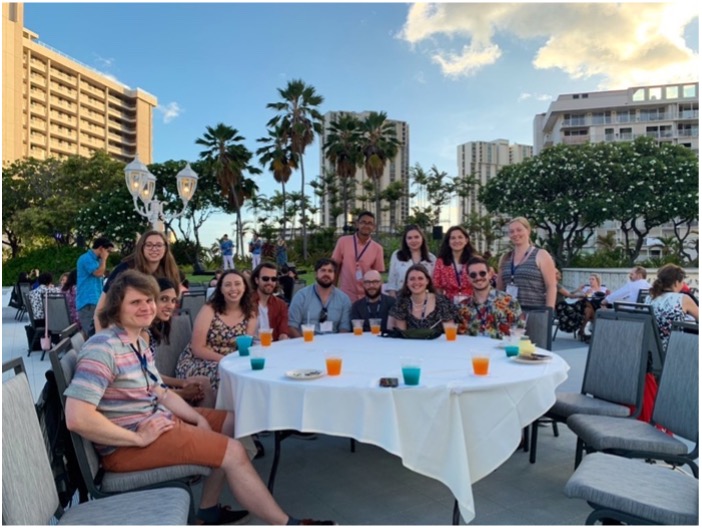
I recently attended the Goldschmidt 2022 Geochemistry conference in Honolulu, Hawai’i. It was a great conference with a rich and diverse programme to cater for every aspect of geochemistry. There were plenty of interesting plenaries, talks, and poster sessions throughout the week. I was able to build on and maintain numerous academic and industry connections during this conference. My decision to volunteer for the conference definitely helped with this too, as I was able to make really great friends and connections that will stay with me throughout my academic career and beyond. Other than the breathtaking views of the Hawaiian Islands and the lush tropical climate, we were spoiled with a taste of traditional Polynesian cuisine and culture at the rooftop party on the penultimate night of the conference.
I presented an update on the initial results from my doctoral research project, aimed at searching for extraterrestrial liquid water in astromaterials (such as asteroid and meteorite samples). Planetary science is definitely coming back into fashion, and this has become noticeably more apparent with each passing year. Perhaps, this has been aided considerably by the recent successful sample return missions to two near-Earth asteroids, along with the ongoing NASA-led sample return missions to Mars and other asteroids.
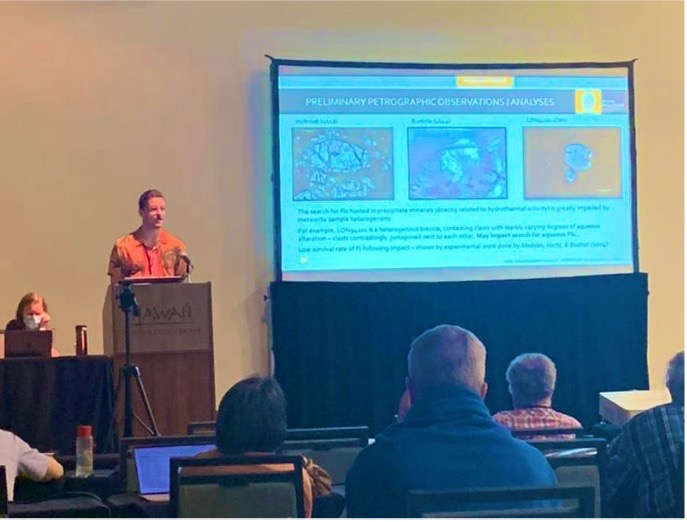
My oral presentation facilitated some very interesting and helpful discussions regarding the direct study of liquid water on asteroid parent bodies, along with the extent and effects of hydrothermal alteration throughout the Solar System. I would like to thank the Geochemistry Group of the Geological Society of London and the Mineralogical Society of Great Britain and Ireland for kindly providing partial funding via their Meeting Attendance Bursary and allowing me to attend this conference in person. Mahalo!
Yingchu Shen – 2022 AGU fall meeting, Chicago
The AGU fall meeting is one of the worldwide most influential earth and space science meetings. This is my first international conference since I started my PhD study in 2021 Feb during the global COVID19 pandemic. I was really happy and excited to attend it in person, hoping to accumulate some presentation skills, expand my horizon in oceans and climate research, and enhance network with the wider science community.
I gave an oral presentation entitled Last Millennium Seawater Temperature of the Subpolar North Atlantic: Insights from Cold-water Coral Records on Dec 13th for the session OS26A – Advances in Understanding Global Meridional Overturning Circulation from Past to Future: Insights from Multiple Approaches IV Oral, as part of my ongoing project. My research utilizes cold-water corals collected from hundreds of meters depth in the subpolar North Atlantic as unique research objectives. Through high-resolution trace elemental and isotopic geochemical analysis, I reconstructed seawater temperature changes in the central and east subpolar North Atlantic over the last millennium. The data showed that even in hundreds of meters depth, warming since the end of little ice age and the start of industrial revolution was recorded in the cold-water coral skeletons. I am exploring the relative timing and driving mechanisms between past climate change and such ocean temperature transitions. Such work can help us better understand the interactions between variable natural processes, anthropogenic impact and past ocean and climate changes, and hopefully, enlighten future ocean and climate predictions under the pressing global climate crisis.

Apart from learning and practicing presentation skills, I was able to meet and chat with our collaborators from US for their skeleton-bound nitrogen isotope work of paired cold-water coral samples tracing hydrography changes of the surface ocean in the subpolar North Atlantic regions. Besides coral geochemistry as paleo archives, I listened to several presentations from paleoceanographers working with marine sediment cores, and physical oceanographers targeting modeling research, helpful to help me
Besides science, I also explored a bit of the Chicago city with friends. There was a heavy snow right before we were leaving. Thanks to the unique geographic location of the conference center McCormick Place, it was easy to reach the beautiful Michigan lake – a snowman and a farfalle happily joined our “snowish session” as well :-)!

I am thankful for the Geochemistry Group travel grant that helped reduce the financial barrier to my first-time participation in the Fall Meeting. I got the chance to learn a bit about state-of-the-art theory and techniques, enhanced network with collaborators, met a few early career researchers from other research groups and institutes, and received some direct external feedback regarding my research content and progress.
Meanwhile, it was a warm memory attending the 2022 GGRiP meeting earlier in Cardiff. The conference provided a friendly communication environment for geochemists, especially encouraging early-stage postgraduate students to develop effective communication skills, and establish connection with the wider UK geochemistry community. Hopefully there will be chance for me to attend other conferences and sessions held by the Geochemistry Group in the future.
George Wright – Untangling the Rhyacian Orogen hidden within the central Ribeira Belt, SE Brazil
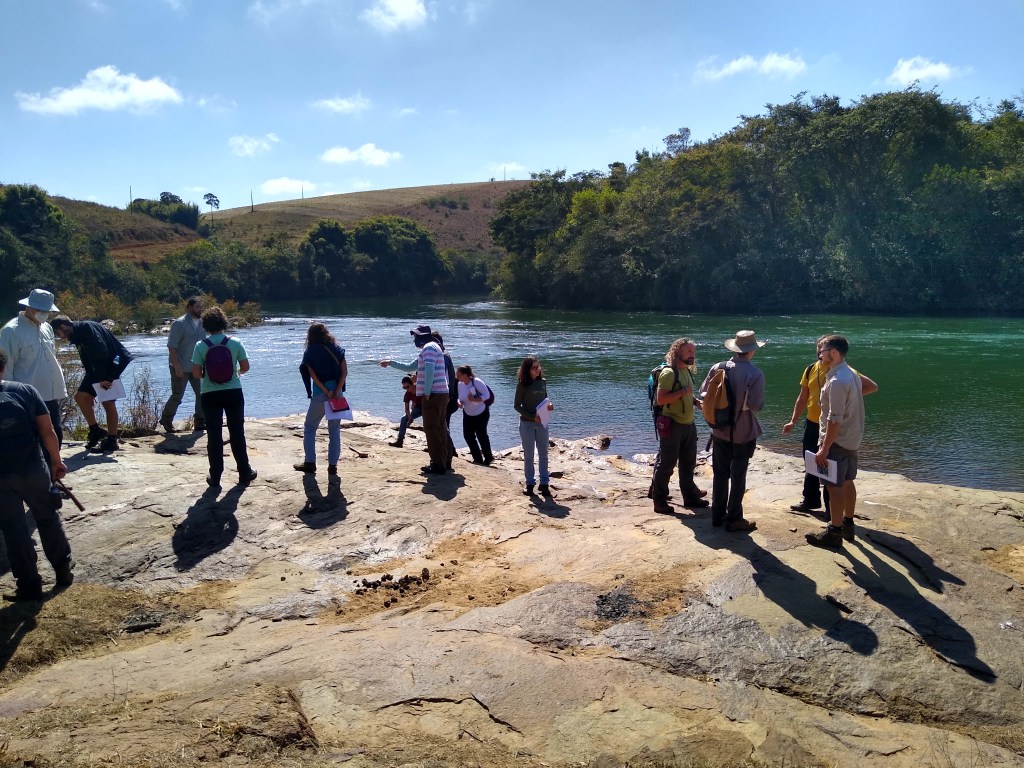
Like others, my master’s degree has been delayed and disturbed in many ways and many times from the troubles of the last few years, but my trip to Brazil was a long-awaited relief. Finally, I had the opportunity to visit my research area and gain a better understanding of the in-situ and regional geological context.
I travelled to Minas Gerais state in SE Brazil to take part in a State University of Rio de Janeiro hosted event, touring from the small colonial-era town Tiradentes to the bustling city of Juiz de Fora. The fieldtrip, ‘Untangling the Rhyacian Orogen’, was a one-off event showcasing current research within the Ribeira (orogenic) Belt. This belt, fringing the São Francisco craton, developed during the Pan-African orogeny between 620 and 510 Ma, culminating in the formation of western Gondwana. Current research questions on the formation of the belt were highlighted during presentations at each locality by researchers from a host of universities across the country. Here I was able to discuss my project titled “The Structural Evolution of the Cabo Frio Thrust” (a test of my Portuguese), which formed during the final collisional event of the orogen. Talking to the Brazilian ‘hard rock’ community gave me a better understanding of the larger context of my work and critical advice for solving problems in this incredibly complex geological area.
A particularly puzzling migmatite was a highlight of the trip, as well as an introduction to Brazilian barbecues which are a realm above the standard back home. I must also note the great hospitality of this community and the opportunities they’ve given me to return.
I am thankful to the Geochemistry Group and their travel grant for helping to make this incredible opportunity possible.
Adrienn Maria Szucs – 7th European Conference on Crystal Growth (ECCG7), Paris
I was very excited to attend the 7th European Conference on Crystal Growth (ECCG7), Paris, France as this was the first conference where I was able to attend and present my work in
person.
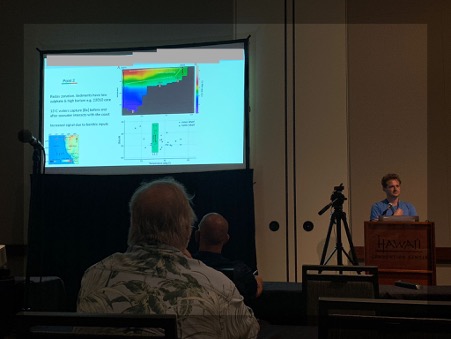
The schedule was filled with various interesting sessions; no doubt, it caused me quite a headache to decide which one to pick. ECCG7 really brought together the frontiers of crystal growth and crystallography. As an experimental geoscientist, it was interesting to hear about the new finding and approach to theoretical modelling. During the conference, I had several conversations about needed collaborations between theoretical and experimental geoscientists, and thus, I collected several contacts that might result in future collaborations. My talk was the final session of the first day of the conference; Regardless of the late hours, I was happy to see a smaller crowd during my talk. The audience posed some very interesting questions which I had the luck to answer later through the conference as time cut us short. My favourite part was the poster sessions as this was the first time when I could point at a poster and at the same time talk to the author which led to several interesting discussions.
By attending ECCG7, I could expand my network, improve my presentation skills, and share and improve my research. I have left ECCG7 with two prizes:
- Acta Cryst. B Prize for The Best Oral Presentation from an Early-Career Researcher
- The International Union of Crystallography Awards Young and Early Career Scientists Award
I feel very honoured and beyond thrilled for being recognized and selected for such prizes. This would have not happened without the support of the Geochemistry Group who made it possible for me to attend ECCG7 by covering the fees of my flight. I am truly grateful for their support.
Ethan Petrou – Goldschmidt 2022, Honolulu
In July 2022 I travelled to Honolulu, Hawaii to attend the Goldschmidt 2022 conference, the largest, international conference that specialises in geochemistry. After an eighteen-hour journey by plane, I finally landed in Hawaii with the same bright sun that I had left in the UK due to the 11-hour time difference. Goldschmidt is a week-long conference, and I was due to present on the Monday.
My abstract was accepted into the programme of the conference where I presented my recent DPhil research, diagenetic cycling of barium isotopes in anoxic sediments, as an oral presentation. I presented my talk in theme 12: metals and nutrient cycling, where my research directly sits, to a large audience both in the room and online. Attending this session in person allowed me to build a diverse, international network that could lead to potential future collaborations and help launch my career in academia post-graduation.
In addition, giving an oral presentation increased my science communication skills to specialist and non-specialist audiences and allowed me to practise for my viva by receiving (many!) complex questions.
Knowledge acquired from attending other presentations in the conference provided me with a contemporary, wider geochemical outlook, and it was inspirational to see the applicability of geochemistry on other fields from mining to medicine. What I enjoyed most from the conference was the chance to meet and build up connections with other geochemists from across the globe who were at different career stages, something that hasn’t been possible in years due to the Covid-19 pandemic.
After the conference I was able to travel to the Big Island and spend some time with other Oxford students hiking around the Hawaii Volcano National Park, scrambling over cooled lava flows, and relaxing on beaches of black sands! A truly incredible experience for a geoscientist and it felt like we were living directly what we learn from our textbooks.
I am extremely grateful to GGRIP in providing funding to help make it possible for me to attend the conference.

Madeleine Murphy – Goldschmidt 2022, Honolulu
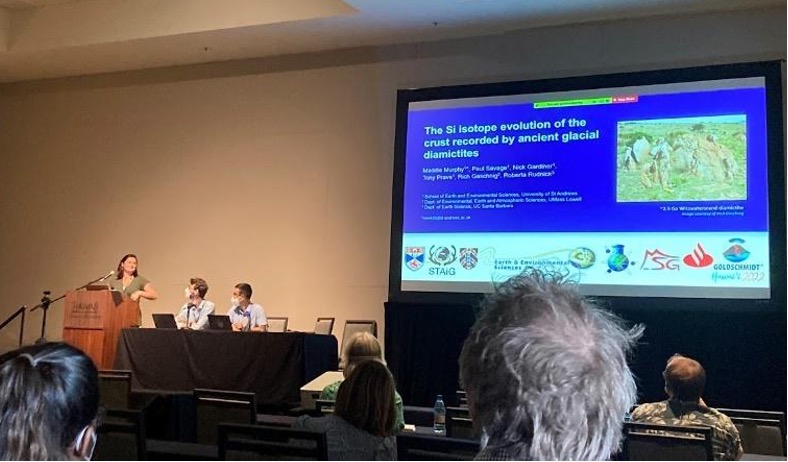
As the foremost international geochemistry conference, Goldschmidt provides a unique annual opportunity for early career researchers and senior scientists alike to share the latest geochemical ideas. This July it was held in Honolulu, HI, and I was lucky enough to attend and present a talk entitled “The Si isotope evolution of the crust recorded by ancient glacial diamictites.” The week was packed with specialized talks as well as evening poster sessions, which fostered a convivial and collaborative environment to discuss science.
When it came time to deliver my talk, I was nervous and excited! I was enthusiastic to present my first lead-author paper, which outlined our findings on the secular homogenising of silicon isotopes in the upper continental crust. There were audience questions at the end of my talk, and I subsequently networked with researchers whose interests were piqued by my presentation. Attending Goldschmidt provided me an unmatched opportunity to meet peers, possible mentors, and future collaborators within geochemistry and present my research to an international audience for the first time. I would not have been able to attend this conference without financial support from the Geochemistry Group, and I am beyond grateful to have had this experience to explore geochemistry in a setting as incredible as Hawaii. Mahalo!
Kiara Brooksby – Goldschmidt 2022, Honolulu
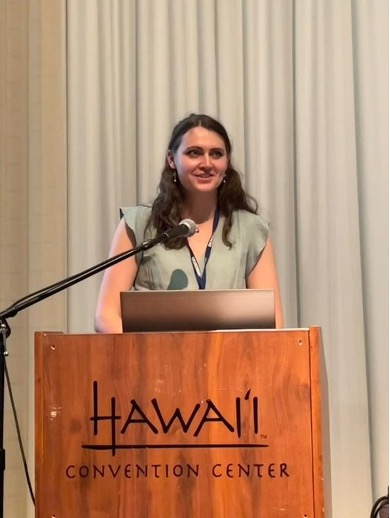
It was a privilege and nerve-racking experience to conduct my first in-person presentation at the 2022 Goldschmidt Geochemistry Conference in Hawaii. My research titled ‘‘Litho- and Chemo-Stratigraphy of the Critical Zone at Sandsloot, Northern Limb of the Bushveld Complex: A Data Science Approach’ has developed from a 2020 lockdown masters project into an academic paper for publication (currently in preparation), in my own time. Therefore, the ability to share and present this work to like-minded and prominent researchers through the session ‘Resources for a low Carbon future’ provided a fulfilling conclusion to our hard work.
Conducted in partnership with Anglo American this project utilises novice geochemical tools on the data-rich environment of the Northern Limb, Bushveld deposit in South Africa. Data science techniques, which are not as leveraged by exploration geosciences, provided the tools to identify distinct rock types based solely on geochemistry. Lithological groupings were used to distinguish geological domains while contextualising their location and correlation with mineralised horizons across multiple boreholes. Completed by human interpreters’ domain correlation is often highly subjective, but our methodology utilising data science techniques allows a complex and very large database to be handled more systematically and robustly.
Jinrong Gan – ICP14 BERGEN, Sep 2022.
I am grateful for the funding that Geochemistry Group Travel Bursary could provide to support my overseas conference in person in Bergen, Norway. ICP14 gathered top scientists all over the world in the Paleoceanography community to share the updated research and meet each other. In my third year of PhD, 14th International Conference on Paleoceanography (ICP14) is a great opportunity for personal and career development. This helped me to have a cutting-edge view of paleoclimate during the Pliocene period and the broader advances in the Paleoceanography community. It also raised my profile within the community and allowed me to network with senior and junior scientists.
ICP14 was a well-organised conference which is composed of two different parts every day during the whole week’s agenda. Mornings were given for the reports session while afternoons were planned to show the posters, which means you could have plenty of time to soak in the academic atmosphere and ask the owners of the poster questions directly. Using the new age model for U1448 with elemental data, a preliminary conclusion about the behaviour of the ancient monsoon in this region was depicted in a poster.
Personally, the excellent experience I had in ICP14 provided me with a brilliant opportunity to learn and left me with a good memory. Below is the picture of the first-day performance concert. Thanks again for Geochemistry Group Travel Bursary!

Charlie Compton-Jones – Goldschmidt 2022, Honolulu
Initially scheduled to take place in summer 2020, Goldschmidt 2022 in Hawai’i was the first Goldschmidt attended in person since the 2019 meeting in Barcelona, following two years of entirely virtual events. Hosted at the Hawai’i Convention Center in Honolulu (interestingly – for me at least – the same building used to film the scenes inside Sydney Airport in the iconic TV show Lost) the return of Goldschmidt took place over a sunny seven-days in July and consisted of the usual series of short format talks, poster sessions, and invited plenary lectures, and concluded with the choice of many optional post-conference field trips across the Hawaiian islands.
This was my first attendance at an in-person conference since January 2020 (MDSG in London) so it was a fantastic experience to finally present my research on orangeites and the evolution of the lithospheric mantle beneath South Africa in-person, which took place on the final day within the Theme ‘Formation and evolution of oceanic and continental lithospheric mantle’.
Each day an invited researcher delivered an enthusiastic and informative talk across the field of geoscience and geochemistry. Particular highlights came from Kathryn Goodenough’s lecture ‘Critical Raw Materials for the Energy Transition’ and Chip Fletcher’s ‘Multiple Overlapping Planetary Emergencies – A Human Inflection Point’. These powerful talks highlighted the important role we have as geoscientists in attempting to reduce the continued physical and social effects of global warming our planet is experiencing, whether that be via the extraction of green metals or simply by raising awareness and voting within our respective communities.
Goldschmidt 2022 was an unforgettable experience full of fantastic science in stunning surroundings; the bar has been set high for next year’s meeting in Lyon.
Patrick Barth – EGU General Assembly 2022 in Vienna
The EGU General Assembly is a huge, week-long conference, bringing thousands of geologists, geochemists, planetary scientists, and researchers from many more disciplines to Vienna. Everybody was excited to meet in-person again, but it was also possible to participate virtually, with many talks being broadcasted from all over the world.
Attending the first in-person conference of my PhD, I was interested in the many different networking events taking place throughout the week, including the EGU-Pride Icebreaker and the Planetary Science division dinner featuring the famous Viennese Schnitzel. The sessions did not only focus on the many different science disciplines represented at the meeting, but also on interdisciplinary research, diversity and inclusion, and science communication and outreach. As I’m not sure what I want to do after my PhD it was fascinating to see, how many options I have with my degree: from the ‘classic’ postdoc route, via science policy, to science journalism and outreach. The short courses on networking, outreach, and careers, organized by the early career representatives, were particularly helpful.
The second half of the week was much more focused on my research area, with sessions on early Earth, lightning, planetary atmospheres, and “Life as a planetary phenomenon”. The latter session included my talk on “Nitrogen fixation by lightning and its role for early life on Earth and exoplanets” which was well received although 5 minutes were not nearly enough time to give a complete overview of my work. I was also able to meet several collaborators in person for the first time and meet other people in my field that I’ve only known from zoom meetings or twitter.
I’m very grateful to the Geochemistry Group for their support allowing me to present my research at this conference. I’m certain the experiences I gained and contacts I made during this week will help me to advance my future career.
Escenfelder – GGRiP attendance report
From May 4th to 6th the Geochemistry Groups Research in Progress was held at Cardiff University. There was quite a bit of excitement around the meeting, especially as it was the first time GGRiP was held in person again and because it turned out to be one of the largest meetings hosted so far. The meeting began with a Laser Ablation workshop on the 4th, before beginning fully the next day. After a short morning coffee and a first look at the posters, talks were started by Jung-Woo Park about the influence of the crust on Copper porphyry deposits. Afterwards, sessions on igneous processes, erosion and groundwater followed.
After the poster session in the evening, most made their way to the pub quiz hosted by the Geochemistry Group, which was a wonderful way to meet other attendees in a more relaxed environment.
The final day was kicked off by Ernest Chi-Fu, talking about how focusing on biological responses to toxins (e.g. Arsenic) can give great insight into the evolution of early life. The rest of the day was focused on Biogeochemistry and Ocean chemistry, with many talks focussing on cold-water corals. The final key-note speech by Rachael James on the use of enhanced weathering for carbon capture was a great finale to the meeting.
Overall, the first in-person GGRiP since 2019 was an enormous success and a great platform to learn about current geochemistry research in the UK and Ireland. Thank you to the Geochemistry Group for allowing me to attend through a Meeting Attendance Bursary.
Madison Shankle – EGU General Assembly, May 2022
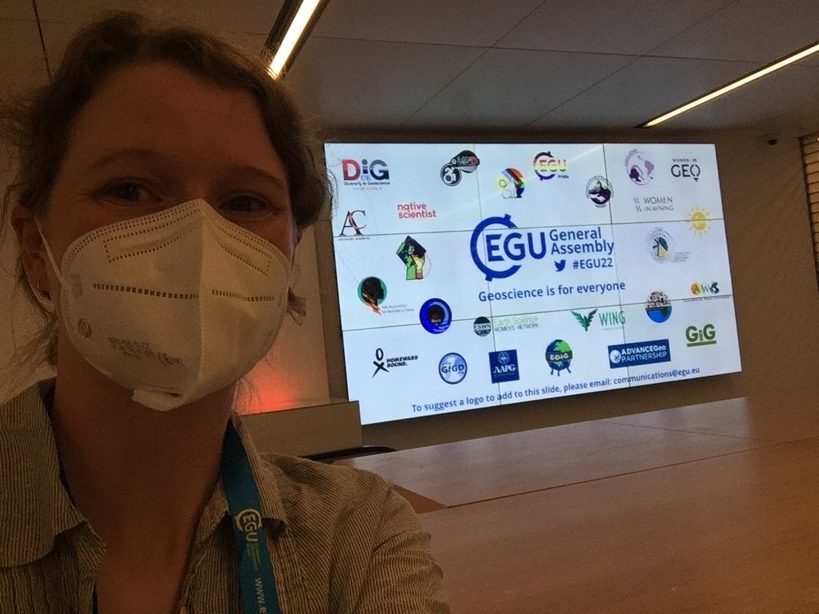
Thanks to the generous funding of the Geochemistry Group’s Student Travel Bursary, I was able to attend the first international, in-person conference of my PhD – the 2022 General Assembly of the European Geosciences Union. After two years of COVID, I was beginning to fear my entire PhD would be conducted in virtual meetings and over video calls, so when I stepped on the plane to travel to the conference in Vienna, I felt especially grateful that I would finally be able to share my work in-person.
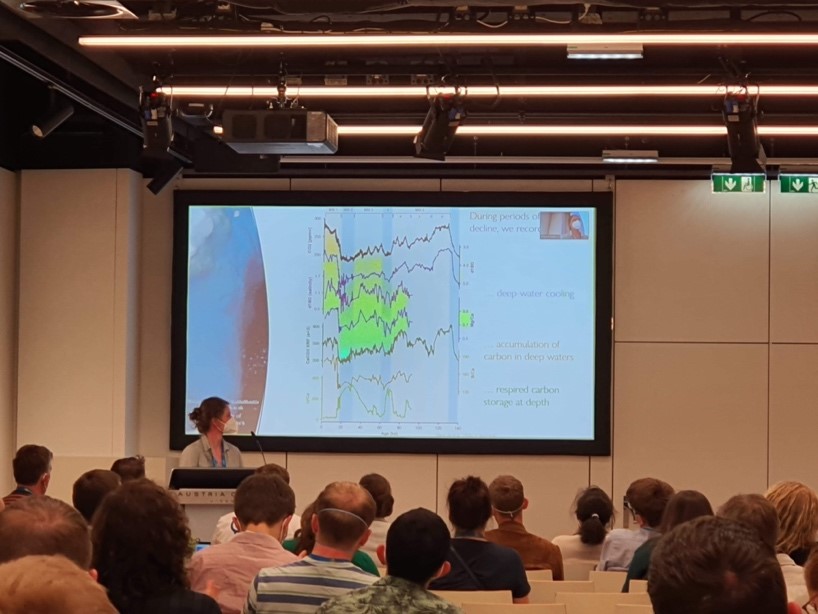
I gave my talk a session titled “The Southern Ocean in a changing climate: open-ocean physical and biogeochemical processes”. This session was perfectly suited to my diverse range of interests while still staying focused on my study area of the Southern Ocean. I saw talks discussing physical oceanography and circulation of the Southern Ocean as well as talks about biogeochemistry and such topics as carbon and heat transfer. I was very happy to be included as one of three palaeoceanography talks, and I presented geochemical data recording physical and biogeochemical changes undergone by the Southern Ocean over the Last Glacial Period, implicating both the physical and biological carbon pumps in the drawdown of atmospheric CO2.
Giving my first talk at a large conference like EGU was a major milestone of my PhD all on its own, but there were several other highlights of my time at EGU as well. I reconnected with friends and colleagues from my Master’s program, who in turn connected with me an alumna of my Master’s university who I plan on reaching out to (networking is so much easier in-person than on Zoom!), and I also enjoyed attending the Ocean Science Division’s Outstanding Early Career Scientist Award Lecture and connecting with the speaker later over our similar research interests. Such connections as these are enormously more organic and more fruitful at an in-person conference than a virtual one, and for this I am especially grateful for the Geochemistry Group’s travel bursary. For my first conference out of COVID, it went exceptionally well!
 Geochemistry Group